



CVPR 2026 · Half-Day Tutorial · Hybrid

Foundations and Frontiers
of Watermarking

Algorithms · Multimodal Extensions · Benchmarks · Authenticity Frameworks

Date · Thursday, June 4, 2026 Time · 1:00 PM – 5:00 PM Venue · CVPR 2026 · Denver, CO Room · Mile High 2B Format · Hybrid · In person + livestreamed
Adobe Meta AI University of Siena University of Maryland CVPR 2026

Overview

Invisible watermarking has re-emerged as a critical pillar of trustworthy AI and media authenticity in the era of generative models. This tutorial provides a unified end-to-end treatment of watermarking, spanning classical signal-processing theory, modern deep-learning methods, multimodal extensions (image, video, audio, 3D), robustness benchmarking, and real-world deployment within industrial provenance ecosystems.

What you will learn

  • The classical foundations of watermarking — spread spectrum, quantization-based embedding, the imperceptibility / payload / robustness triangle, and security analysis.
  • Modern deep-learning watermarking: encoder–decoder architectures, adversarial training, and perceptual losses.
  • Multimodal extensions to audio, video, and 3D representations such as neural radiance fields and Gaussian splats.
  • Generative watermarking paradigms — model fine-tuning, noise-space methods, and sampler-level approaches.
  • Stress-testing watermark robustness under regeneration, compression, and adaptive attacks.
  • Deployment in real-world provenance ecosystems: provenance metadata, durable credentials, and cross-system interoperability across competing watermarking schemes.

Target audience

Researchers, graduate students, and practitioners in computer vision, multimedia security, and trustworthy AI who want a coherent, technically deep introduction to watermarking and its modern applications. Familiarity with deep learning fundamentals is assumed; no prior background in watermarking is required.

Venue & Date

Conference

CVPR 2026

Date

Thursday, June 4, 2026

Time

1:00 PM – 5:00 PM

Location

Denver, Colorado, USA

Room

Mile High 2B

Format

Hybrid

This is a hybrid tutorial. In addition to the in-person session in Denver, the tutorial will be livestreamed for virtual attendees of CVPR 2026. Remote participants can follow the talks live through the official CVPR virtual platform.

Schedule

All times local to Denver. Order and timing may shift slightly closer to the conference.

  1. 1:00 – 1:05 PM 5 min

    Opening Remarks

    Dr. Vishal Asnani · Adobe Research

    Why watermarking matters now: the generative-AI authenticity problem, an outline of the afternoon, and how the sessions fit together.

  2. 1:05 – 1:45 PM 40 min · talk + Q&A

    Real-World Authenticity Systems

    Dr. Shruti Agarwal · Adobe Research

    Live demonstrations of deployed authenticity systems used by major technology platforms. The session traces verifiable provenance metadata from creation through inspection, shows how invisible watermarks persist across common internet transformations, and explores how multiple watermarking schemes from different providers can coexist and be discovered by independent verification platforms.

  3. 1:45 – 2:25 PM 40 min · talk + Q&A

    Multimodal & Generative Watermarking

    Dr. Pierre Fernandez · Meta FAIR

    Modern deep-learning watermarking organized around three axes: post-hoc encoder–decoder methods for images, their extension to other modalities (audio, video, and 3D), and the emerging paradigm of generative watermarking — including model-level fine-tuning, noise-space manipulation, and sampler-level techniques that embed the watermark during the generation process itself.

  4. 2:25 – 2:40 PM · Short break
  5. 2:40 – 3:20 PM 40 min · talk + Q&A

    Classical Watermarking Foundations: Lessons from the Past

    Prof. Benedetta Tondi · University of Siena

    A structured journey through classical watermarking foundations: spread spectrum, quantization-based informed watermarking, the imperceptibility / payload / robustness trade-off triangle, and the rich line of work on watermark security through sensitivity and collusion attacks. We then revisit these classical principles in the modern context of post-hoc watermarking for generative AI imagery.

  6. 3:20 – 3:30 PM · Coffee break
  7. 3:30 – 4:10 PM 40 min · talk + Q&A

    Benchmarking & Robustness Evaluation

    Prof. Furong Huang · University of Maryland

    A principled framework for evaluating watermark robustness. We discuss attack taxonomies (distortion, regeneration, adversarial), evaluation criteria (BER, AUC, fidelity), and standardized stress-test benchmarks — with hands-on insights into reproducing fair comparisons across competing schemes.

  8. 4:10 – 4:50 PM 40 min · talk + Q&A

    Proactive Schemes as a Unifying Lens for Downstream Watermarking Applications

    Dr. Vishal Asnani · Adobe Research

    Proactive schemes as a unifying framework for embedding constructive, verifiable signals into media and ML systems. We present a taxonomy spanning data perturbation, template learning, and applications across vision models, LLMs, diffusion, privacy systems, and 3D — clarifying threat models and open challenges in robust, responsible watermarking.

  9. 4:50 – 5:00 PM 10 min

    Closing Remarks & Open Q&A

    All organizers

    Synthesis of the afternoon, audience questions across sessions, and pointers for further reading and benchmarks.

Speakers

A multi-institution team spanning industry research labs and academia.

Dr. Vishal Asnani

Dr. Vishal Asnani

Research Scientist · Adobe Research

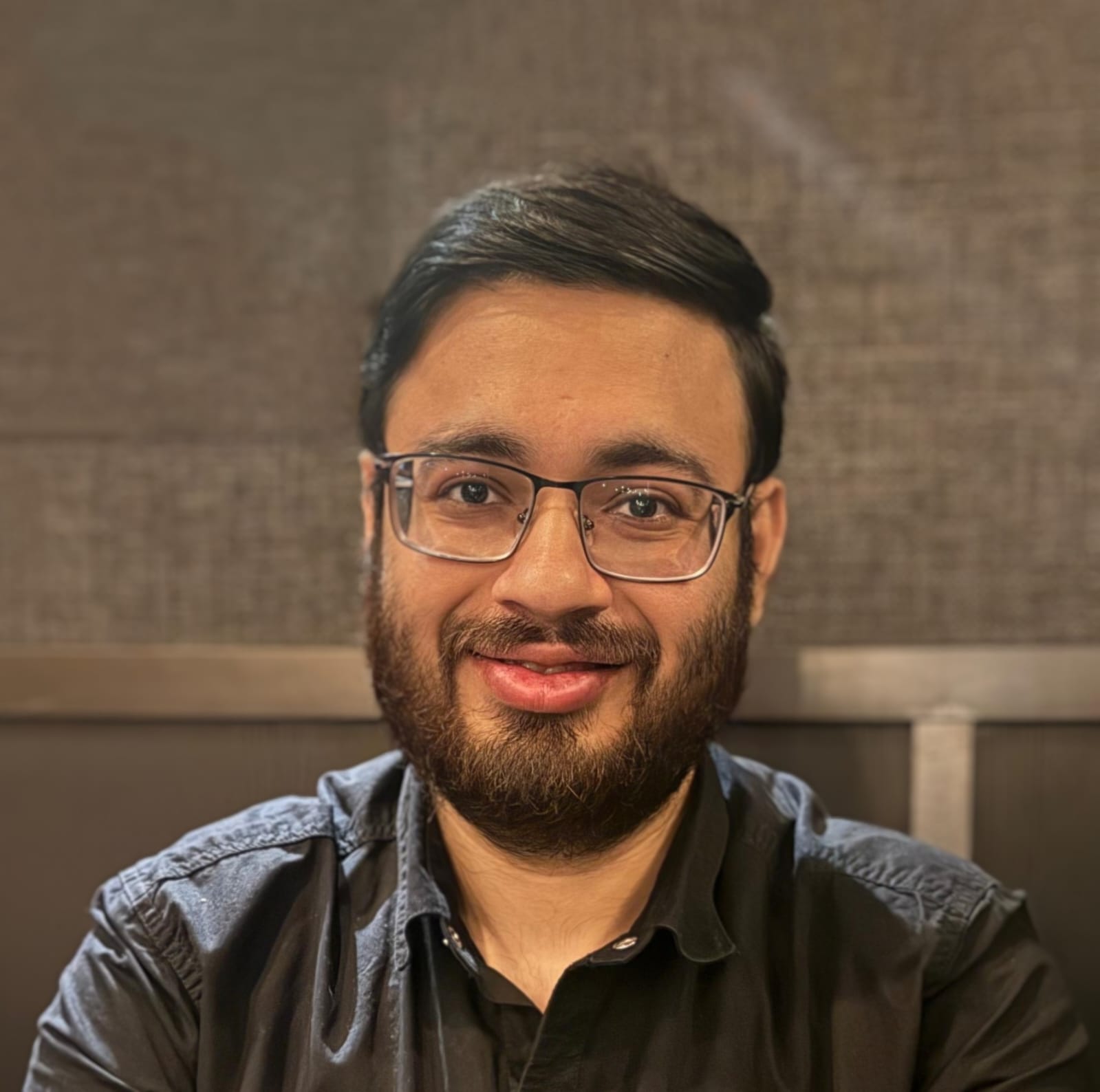
Vishal is a Research Scientist at Adobe Research in the Cross-modal Representation Learning (XRL) team in San Jose, working on Content Authenticity and Responsible AI — including watermarking and durable content credentials for video. He earned his PhD at Michigan State University, advised by Prof. Xiaoming Liu.
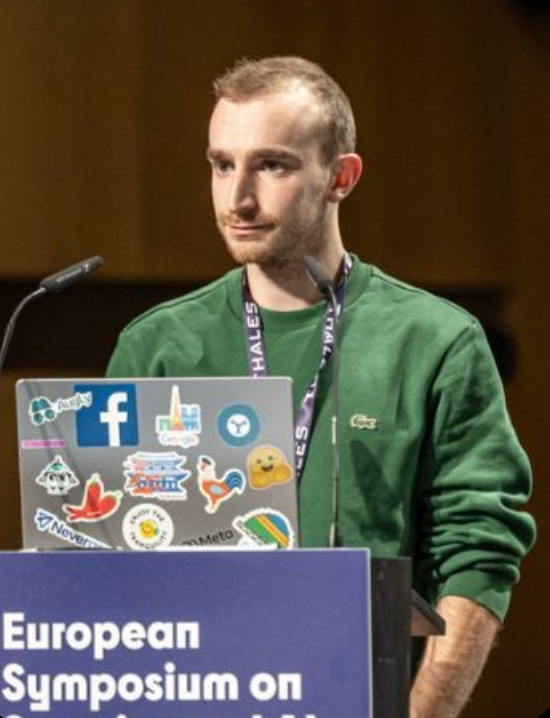
Dr. Shruti Agarwal

Dr. Shruti Agarwal

Research Scientist · Adobe Research

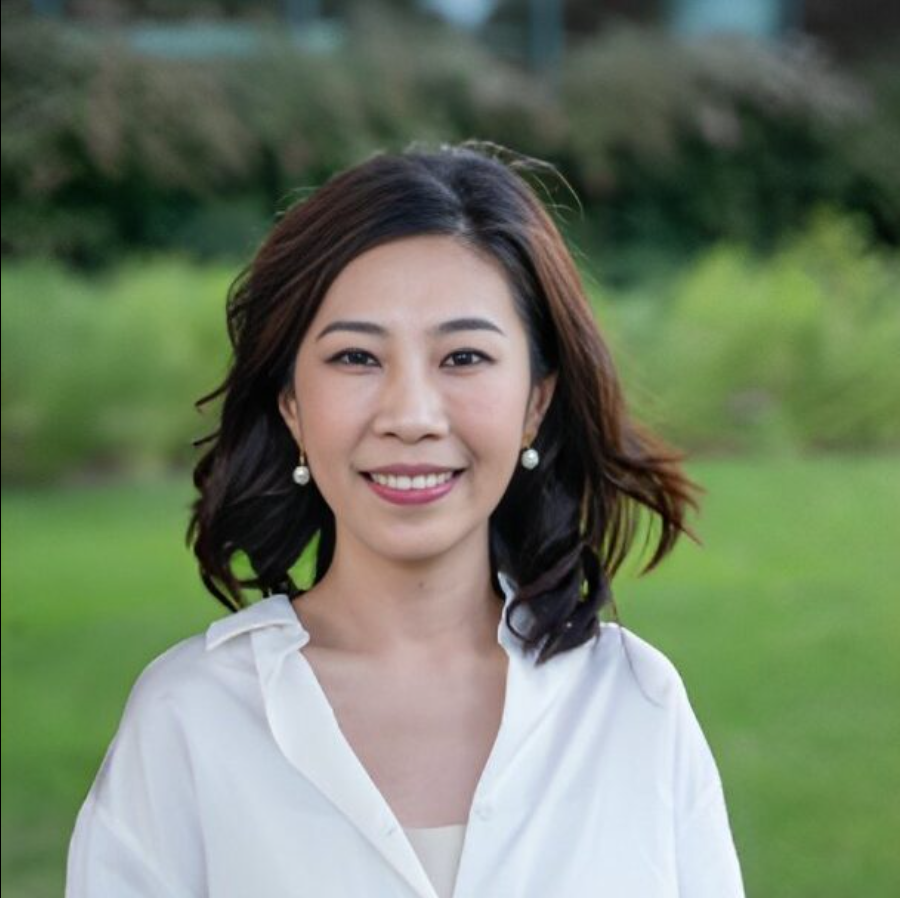
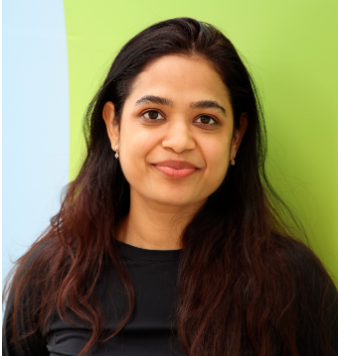
Shruti is a Research Scientist on the AI for Content Authenticity team at Adobe. Her work centers on content provenance and multimedia forensics — spanning watermarking, deepfake detection, and robust image fingerprinting. She was previously a postdoc at MIT CSAIL with Prof. Bill Freeman and earned her PhD at UC Berkeley with Prof. Hany Farid.

Dr. Pierre Fernandez

Dr. Pierre Fernandez

Research Scientist · Meta FAIR (Paris)

Pierre is a Research Scientist at Meta FAIR Paris. His research focuses on content protection, safety, and watermarking for generative models — making AI-generated content traceable and identifiable. He completed his PhD at FAIR / Inria Rennes with Matthijs Douze, Hervé Jégou, and Teddy Furon.

Prof. Benedetta Tondi

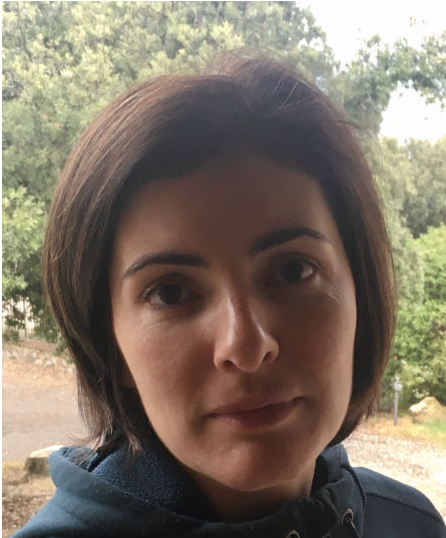
Prof. Benedetta Tondi

Assistant Professor · University of Siena

Benedetta is an Assistant Professor at the Department of Information Engineering and Mathematics, University of Siena, and a member of the VIPP Group led by Prof. Mauro Barni. Her research applies information-theoretic and game-theoretic methods to multimedia forensics, watermarking security, and adversarial signal processing for ML.

Prof. Furong Huang

Prof. Furong Huang

Associate Professor · University of Maryland

Furong is an Associate Professor in the Department of Computer Science at the University of Maryland, affiliated with UMIACS, the Maryland Robotics Center, AMSC, and ECE. Her research bridges trustworthy machine learning, sequential decision-making, and generative AI, with contributions to systematic stress-testing of watermark robustness.

Reading List

A curated set of papers covered or referenced in the tutorial, grouped by session.

Classical Watermarking Foundations

  • Cox, Kilian, Leighton, Shamoon. Secure spread spectrum watermarking for multimedia. IEEE TIP, 1997.
  • Cox, Miller, McKellips. Watermarking as communications with side information. Proc. IEEE, 1999.
  • Chen & Wornell. Quantization index modulation: A class of provably good methods for digital watermarking and information embedding. IEEE TIT, 2001.
  • Cayre, Fontaine, Furon. Watermarking security: Theory and practice. IEEE TSP, 2005.
  • Comesaña, Pérez-Freire, Pérez-González. Fundamentals of data hiding security and their application to spread-spectrum analysis. IH, 2005.
  • Tondi, Costanzo, Barni. Of-SemWat: High-payload text embedding for semantic watermarking of AI-generated images. ICASSP, 2026.

Multimodal & Generative Watermarking

  • Zhu, Kaplan, Johnson, Fei-Fei. HiDDeN: Hiding Data With Deep Networks. ECCV, 2018.
  • Tancik, Mildenhall, Ng. StegaStamp: Invisible Hyperlinks in Physical Photographs. CVPR, 2020.
  • Bui, Agarwal, Collomosse. TrustMark: Robust Watermarking and Watermark Removal for Arbitrary Resolution Images. ICCV, 2025.
  • Souček et al. Pixel Seal: Adversarial-only Training for Invisible Image and Video Watermarking. arXiv:2512.16874, 2025.
  • San Roman, Fernandez, Furon, Défossez, Tran, Elsahar. Proactive Detection of Voice Cloning with Localized Watermarking. ICML, 2024.
  • Fernandez, Elsahar, Yalniz, Mourachko. Video Seal: Open and Efficient Video Watermarking. arXiv:2412.09492, 2024.
  • Luo, Guo, Cheung, See, Wan. CopyRNeRF: Protecting the Copyright of Neural Radiance Fields. ICCV, 2023.
  • Fernandez, Couairon, Jégou, Douze, Furon. The Stable Signature: Rooting Watermarks in Latent Diffusion Models. ICCV, 2023.
  • Wen, Kirchenbauer, Geiping, Goldstein. Tree-Ring Watermarks. NeurIPS, 2023.
  • Yang, Zeng, Chen, Fang, Zhang, Yu. Gaussian Shading: Provable Performance-Lossless Image Watermarking for Diffusion Models. CVPR, 2024.
  • Jovanović, Labiad, Souček, Vechev, Fernandez. Watermarking Autoregressive Image Generation. NeurIPS, 2025.

Benchmarking & Robustness

  • An et al. WAVES: Benchmarking the Robustness of Image Watermarks. ICML, 2024.
  • Tondi, Guo, Pancino, Barni. JMA: A General Algorithm to Craft Nearly Optimal Targeted Adversarial Examples. IEEE TIFS, 2025.
  • Jia, Fang, Zhang. MBRS: Enhancing robustness of DNN-based watermarking by mini-batch of real and simulated JPEG compression. ACM MM, 2021.
  • Ma, Guo, Hou, Yang, Li, Jia, Xie. Towards blind watermarking: Combining invertible and non-invertible mechanisms. ACM MM, 2022.

Attribution & Proactive Schemes

  • Asnani, Yin, Liu. Proactive Schemes: A Survey of Adversarial Attacks for Social Good. IJCV, 2026.
  • Asnani et al. ProMark: Proactive Diffusion Watermarking for Causal Attribution. CVPR, 2024.
  • Darvish Rouhani, Chen, Koushanfar. DeepSigns: An end-to-end watermarking framework for ownership protection of DNNs. ASPLOS, 2019.
  • Li, Zhu, Yang, Jiang, Wei, Xia. Black-box dataset ownership verification via backdoor watermarking. IEEE TIFS, 2023.
  • Huang et al. CMUA-Watermark: A cross-model universal adversarial watermark for combating deepfakes. AAAI, 2022.
  • Kirchenbauer, Geiping, Wen, Katz, Miers, Goldstein. A Watermark for Large Language Models. ICML, 2023.
  • Sablayrolles, Douze, Schmid, Jégou. Radioactive Data: Tracing Through Training. ICML, 2020.
  • Yoo, Chang, Luo, Stava, Liu, Milanfar, Yang. Deep 3D-to-2D Watermarking. CVPR, 2022.
  • Shan, Wenger, Zhang, Li, Zheng, Zhao. Fawkes: Protecting privacy against unauthorized deep learning models. USENIX Security, 2020.

Real-World Authenticity & Provenance

  • Petrov, Agarwal, Torr, Bibi, Collomosse. On the coexistence and ensembling of watermarks. arXiv:2501.17356, 2025.
  • Collomosse & Parsons. To Authenticity, and Beyond! Building safe and fair generative AI upon the three pillars of provenance. IEEE CG&A, 2024.
  • Gowal et al. SynthID-Image: Image watermarking at internet scale. arXiv:2510.09263, 2025.

Materials

Slides, code, and recordings will be posted here as they become available.

Talk slides

More resources

Get in touch

Questions about the tutorial, accessibility requests, or collaboration ideas — we're happy to hear from you.

Primary contact: vasnani@adobe.com

For updates as the event approaches, watch this page or the CVPR 2026 program listing.